










Being a teacher of Year 6 is a special privilege: getting to see the pupils reach the end of their primary literacy journey. We, as teachers, all want the children to develop the literacy skills needed to thrive beyond school, so how can we ensure this happens?
- Inspire children to see themselves as writers
Writing confidence and motivation are key for writing success. Ensuring pupils get a balance of writing experiences will widen their opportunities and encourage them to take risks, vary their writing technique and stretch their skills, ultimately supporting them to find the kind of writing that they enjoy most. Research by the Writing for Pleasure Centre (2025), amongst others, explains that writing is best when it is a social activity, giving opportunities for interactions about pupils’ writing craft.
This can be achieved through:
- Writing alongside others and taking part in class writing projects.
- Pupils making connections with their audiences by publishing or performing their writing.
- Pupils receiving recognition for their writing e.g. through celebrations or publishing opportunities.
Encouraging pupils to share their writing is a powerful tool to develop pupils’ writer identity. During the Writing for Pleasure projects carried out by Ross Young and Felicity Ferguson at the Writing for Pleasure Centre, pupils’ confidence increased through their writing being appreciated and celebrated by others, enhancing their writer identity.
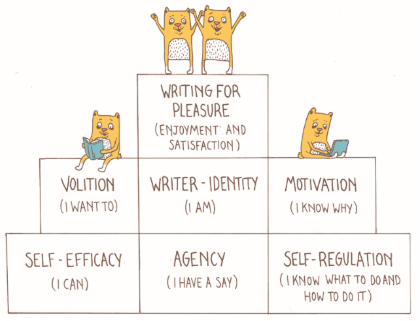
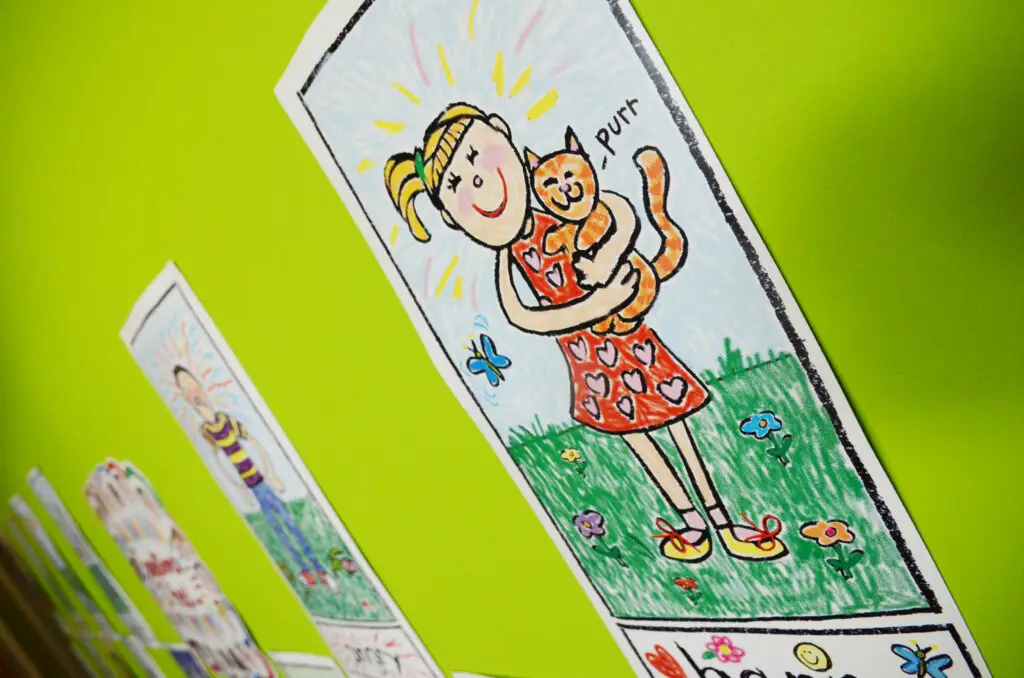
Young & Ferguson’s (2021) hierarchy of emotional writing needs
Most importantly, we must make sure children have a say in what they are writing and that we stimulate them with our choice of writing topics. Pupils perform best when writing about a topic they have secure knowledge and strong interest in. This supports them to manage the cognitive load of the writing process and gives them the knowledge foundation and motivation they need to create rewarding writing.
Considering this hierarchy of needs and supporting all pupils to achieve self-recognition and awareness of their writing strengths and needs is crucial. By doing so, we can support pupils to get the most out of their primary writing instruction and be able to transfer these skills to writing across the curriculum and beyond at secondary school.
- Encourage pupils to love reading
Many of our pupils need help to fall in love with reading, so ensuring that they have been introduced to wealth of high-quality texts and authors which inspire and intrigue them is the ultimate outcome for teachers by the end of primary school.
Creating the perfect class reading atmosphere, where children are excited to hear the next instalment is so important for pupils’ engagement with texts. Encouraging a varied reading diet is another: the class novel is one option, but what about reading aloud non-fiction, poetry and jokes. By providing rich opportunities to explore different genres, formats, and authors, schools can equip children with the confidence, enthusiasm, and habits that will sustain them as lifelong readers.
Reading for pleasure nurtures a wide range of complex skills that extend far beyond enjoyment. It develops comprehension and interpretation, which are essential for making connections across different disciplines. By engaging with diverse authors and styles, readers absorb techniques such as plot construction, language use, and characterisation, which they can draw upon in their own thinking and expression. Through regular practice, they also build self-monitoring strategies that help them reflect on and refine their understanding. Most importantly, reading for pleasure fosters a natural appreciation of the knowledge and insights that texts – whether heard or read independently – can provide. For example, in Year 6, pupils who read a novel such as Holes by Louis Sachar for enjoyment not only experience the excitement of the story but also develop the ability to track complex narrative structures, recognise themes of justice and friendship, and apply these interpretive skills to other areas of the curriculum, such as history or PSHE.
- Make grammar meaningful
Although teaching grammar is often perceived as frustrating, its function within the curriculum is, in fact, to be beneficial and purposeful. It serves to ensure children understand the craft of writing, and how we can use the range of techniques we are charged with teaching to write with purpose, to affect our readers and to create imagery.
The tricky part is remembering the terminology, so re-visiting and re-vising the vocabulary must also be an ongoing task. A secure understanding of grammar helps children make deliberate choices about sentence structure, punctuation, and vocabulary, supporting creativity as well as technical accuracy. By learning grammatical terminology, pupils develop a shared language for discussing how writing works, which strengthens their ability to reflect on and improve their own work.
Teaching grammar in context is key to ensuring that its purpose and use is connected to the terminology itself. Exemplifying the use of the grammatical concept through text composition modelling is vital to ensure pupils understand its value. As teachers, we must be confident and competent in how to teach the effective use of grammatical concepts, and it is our duty to become experts ourselves.
By the end of Year 6, it is essential that children can confidently use and recognise key terminology so that they are prepared for the more complex analysis and application expected in secondary school. This foundation not only supports success in English but also underpins wider literacy skills across the curriculum. For example, primary teachers can embed regular ‘grammar in action’ activities—such as asking pupils to identify and explain the use of conjunctions or figurative language within a class novel. Similarly, in science, pupils might be encouraged to use precise noun phrases when writing up experiments, while in history, they could practise using complex sentences to explain cause and effect. These opportunities ensure grammar is applied meaningfully, helping children see its relevance across subjects and strengthening their confidence as effective communicators.
- Develop competent speakers
Competent oracy skills are vital by the end of primary school because they give children the confidence to express their ideas clearly, listen carefully to others and take part in meaningful discussions. Pupils learn through talk, and the cumulative and exploratory talk that classroom discussions evoke are so important for deepening knowledge, changing opinions and working through misconceptions.
Moreover, being able to speak and listen well helps pupils build strong relationships, work effectively in groups, and explain their thinking which we need for all walks of life.
By Year 6, pupils should be able to adapt how they speak for different purposes – whether that’s giving a presentation, debating a topic, or working collaboratively – so that they are ready to meet the demands of secondary school and beyond. Providing a wealth of opportunities and experiences both in-school and extra-curricular will prepare pupils for the expectations of secondary school.
Pupils should come to the end of primary school being able to recognise their dialect as a strand of Standard English and have the awareness to be able to code-switch for the context they are in. For example, children could be expected to take part in delivering a range of presentations to known and, later, unknown audiences of different sizes. This task requires the pupils to develop the nuances of language required, being selective of word choice in regard to its linguistic complexity when talking to adults versus children, or the formality required for the context which may also link to the physical and cognitive aspects of the talk, for example their manner and the structure of the presentation itself.
Teachers are the high-quality language models children require throughout their oracy development of learning about talk, to understand its diversity and purpose across a range of contexts. Being knowledgeable about language use and how this must be adapted for purpose and audience is a key skill for teachers to pass on, to ensure pupils acquire this awareness before leaving Year 6.
- Bring about language awareness and curiosity
Being word curious and word aware is a habit we can evoke in our pupils to encourage them to think deeply about vocabulary choices – be this in spoken language to avoid offence; to create impact as a writer or to encourage readers to identify with the content they are reading.
To comprehend language either through listening or reading, being mindful about word choices can bring a level of reflection and nuance that may otherwise be missed. We can instil this self-regulation and inquisitiveness in our pupils to develop language awareness and curiosity through our own modelling, questioning and thoughtfulness around this through our classroom practice.
How often do we stop and contemplate the true meaning of a word and why it has been chosen? Do pupils have knowledge of etymology and root words? Do they understand the differences between the tiers of vocabulary that are required in technical writing as opposed to informal chatter?
An example of this might be during a Year 6 guided reading session, the teacher pauses on the word “reluctant” in the text. Instead of simply giving the meaning, the teacher asks: “Why might the author have chosen ‘reluctant’ instead of just saying ‘unwilling’? What’s the difference in tone?” Pupils then explore synonyms (hesitant, resistant, unwilling) and discuss subtle shifts in meaning. The teacher extends this by highlighting the Latin root “luctari” (to struggle) and asks pupils to consider how this deepens their understanding. Finally, pupils compare where this word might appear: in a diary entry (Tier 2 vocabulary) versus in a casual conversation (Tier 1 vocabulary), reinforcing awareness of vocabulary tiers. This activity builds reflection, curiosity, and etymological awareness, while modelling how to interrogate word choice rather than rushing past it.
Bringing pupils’ attention to these nuances through your everyday teaching as well as purposeful focus within spelling or vocabulary focused-lessons, will bring about the curiosity the pupils will apply to the future learning and everyday life – which, in turn, will bring them to deeper understanding, perspective and joy.
Literacy competence by the end of Year 6 is so important for pupils moving on to access the secondary curriculum, however, so is literacy awareness and enjoyment. If we can bring about this knowledge in all pupils, their literary thought processes and understanding will set them in good stead for life beyond primary education.
One Education Year 6 Literacy Network
Whether you are new to year 6 or an experienced member of the Year 6 team, building your literacy teaching knowledge and expertise is an important ongoing focus.
The One Education Year 6 Literacy Network is a termly session where you will meet other Year 6 teachers, gain important knowledge on the latest research, updates and teaching techniques as well as experience opportunities to moderate, share ideas and strategies to boost pupil outcomes. Perfecting Year 6 teaching is an art which requires expert knowledge, so being part of the Y6 Network is a great foundation for all teachers wanting to improve their practice.
Year 6 teachers will hugely benefit from coming together to work across the One Education Year 6 Literacy Network. With three termly sessions, delegates can book onto all or single meetings to engage with the group to learn, share and develop expertise.
‘Attending the One Education Y6 network meetings have given me the opportunity to share good practice and resources with other teachers, not only from within my own local authority, but also from across Manchester. Alice always provides us with fabulous new ideas and invaluable advice, including help with preparing for SATS, writing moderation and lesson plans. I would highly recommend these sessions.’
Mrs J Nolan
Year 6 Class Teacher, English Writing Coordinator
Firs Primary School
Book your place on the Year 6 Literacy Network 2025/6 on our website.
Alternatively, you can email alice.pepper@oneeducation or call 0161 276 0160 for further information.