




Art Therapy can be a vital tool for children and young people who find it hard to articulate their emotions, or fully understand their experiences. In this case study, we explore the profound impact of Art Therapy for pupils with emotional barriers to school attendance (EBSA).
Setting the Scene
Lily, age 9, lives in a densely populated area of Manchester that was heavily affected by the economic and social impacts of the lockdown. During this period, her family faced significant stress due to financial instability, isolation, and lack of outdoor access. As a result, Lily experienced heightened anxiety, social withdrawal, and disrupted sleep, which impacted her return to school. She displayed symptoms of low mood, had trouble concentrating in class, and avoided social interactions with her peers. Following a referral from her school, Lily began art therapy to help her process her experiences and rebuild her confidence.
Our Approach
Stage 1: Establishing a Safe Space and Building Trust
We began by using a range of intervention strategies to create a safe, trusting environment in which Lily could explore and express her emotions through art.
- Introduction to Art Materials and Safe Expression
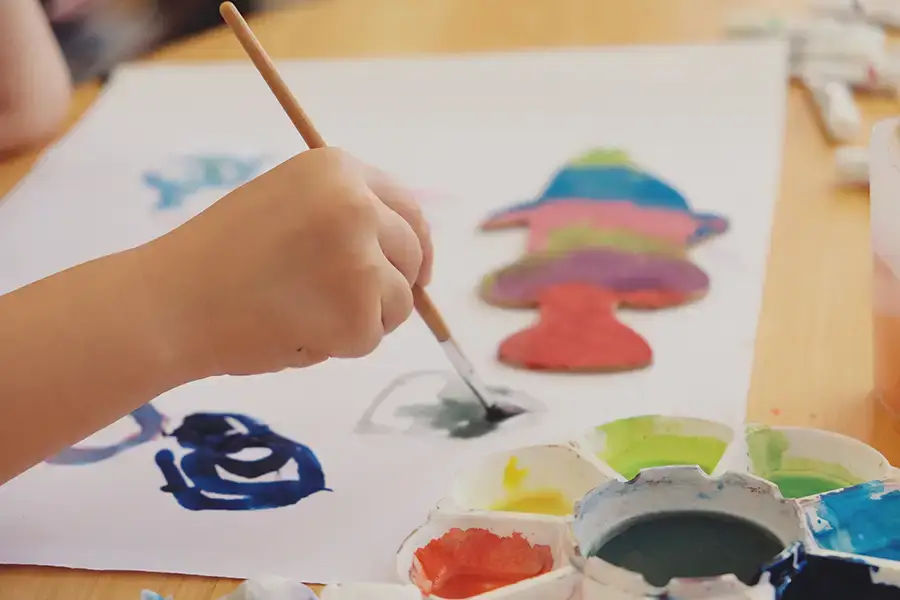
During the initial sessions, the therapist provided Lily with a range of art materials, including pencils, paints, and clay, allowing her to experiment and explore her preferences. Lily gravitated towards using soft pastels and watercolours, which offered her a gentle way to express emotions without the pressure of precision. These sessions were child-led, allowing Lily to establish control over her expression in a way that felt safe and manageable. - Creating a “Feelings Palette”
The therapist guided Lily in creating a “feelings palette,” where each colour represented a specific emotion she had experienced during lockdown (e.g., blue for sadness, red for anger, yellow for hope). This non-verbal activity helped Lily identify and communicate her emotions visually. She used the palette to explore her feelings in a way that felt less direct than talking, making it easier for her to open up. - Collage for “Inside and Outside” Feelings
To further build trust, Lily was invited to create a collage representing her “inside and outside” feelings – those she felt comfortable showing versus those she hid. Lily’s collage showed bright colours for her “outside” feelings, like “happy” and “okay,” while her “inside” collage used darker tones to express sadness, worry, and isolation. This activity helped the therapist gain insight into Lily’s internal emotional landscape, highlighting the contrast between her outward appearance and her hidden emotions.
The Results
Over the first few weeks, Lily developed a strong rapport with the therapist and began expressing her feelings more freely through art. The feelings palette and collage allowed her to articulate emotions without pressure, forming a foundation of trust and self-expression.
Stage 2: Processing Lockdown Experiences through Visual Narratives
Over time, we helped Lily to explore and process specific lockdown experiences, addressing underlying anxieties and fostering resilience.
- Timeline of Lockdown Memories
Using a large roll of paper, Lily created a visual timeline of her lockdown experience. She represented key memories with drawings, symbols, and colours, such as grey clouds for days that she felt isolated, blue for moments of sadness, and small bursts of colour for positive memories like family movie nights. This exercise helped Lily externalise and visually process her experiences, making it easier for her to discuss the challenges she faced. - Creating a “Worry Creature” Clay Sculpture
The therapist introduced Lily to clay to mould her worries into a physical form. Lily created a “worry creature,” a small, clay figure that represented her biggest fears, such as the fear of her parents losing their jobs and the anxiety around returning to school. By creating this creature, Lily gained a sense of control over her anxieties, as she could see and touch them, making them feel more manageable. She would hold the worry creature in sessions, symbolising her ability to confront and contain her fears. - Reframing Negative Experiences through Art
Lily was invited to choose one difficult memory from lockdown that she wanted to “change.” She selected a day when she felt particularly isolated and, with the therapist’s guidance, created an artwork to reimagine this day with more positive elements (e.g., adding images of friends, using brighter colors). This exercise empowered Lily to reframe her narrative, seeing that she could reimagine and transform difficult moments in her mind. It also fostered a sense of hope and allowed her to practice cognitive reframing.
The Results
After engaging in these art-based processes, Lily became more comfortable talking about her lockdown experiences and showed less hesitancy in expressing difficult emotions. She reported feeling “lighter” and described her worry creature as a way to “keep her worries small.” Lily’s confidence in expressing emotions grew, and she started to feel more optimistic about her ability to manage her feelings.
Stage 3: Building Resilience and Coping Strategies for School Re-Integration
Ultimately, we sought to use art therapy to support Lily’s transition back into school, enhancing her self-regulation and emotional resilience.
- “Strength Shield” Art Project
Lily created a “strength shield” using cardboard, paints, and markers. She decorated the shield with symbols and colours representing things that made her feel strong, such as family, nature, and small achievements she had made during lockdown (e.g., learning to bake with her mother). This shield represented her inner strengths and could be “carried” with her in her mind when she returned to school. It helped Lily visualise her resilience and made her feel more equipped to face the challenges of re-integrating with her peers. - Mindful Mandala Art for Emotional Regulation
To help Lily manage stress and anxiety, the therapist introduced mandala drawing, a calming, repetitive art form. Lily created her own mandalas with colors from her feeling’s palette, focusing on deep breathing and relaxation as she worked. This mindfulness-based activity allowed her to experience a sense of calm and control, a tool she could replicate at home or when feeling anxious at school. - Art Journaling for Reflection and Daily Wins
The therapist introduced an art journal where Lily could draw or write about small victories and challenges each day. This journal encouraged her to focus on daily positives, like speaking with a classmate or completing a school task. Lily also drew symbols or small illustrations for things she was grateful for, helping her focus on positive experiences and build resilience by recognising her progress over time.
The Results
With each session, Lily’s confidence grew, and her engagement in school activities improved. She felt more capable of handling challenging situations and used her strength shield and mindful mandala techniques to manage her feelings. Teachers noticed that she began initiating conversations with peers and participating more in class activities. Her art journal became a cherished tool for reflection, giving her a consistent outlet to process emotions and build self-esteem.
Looking Forwards
Lily’s story shows us how Art Therapy for pupils offers a creative, supportive environment to process experiences, express difficult emotions, and rebuild a sense of self. Through artistic exploration, Lily gained tools for emotional regulation and resilience that supported her transition back to school and gave her confidence in navigating social and academic challenges. This art-based intervention demonstrated the power of creative self-expression in helping children from deprived backgrounds manage complex emotions and thrive post-lockdown.
If you would like to learn more about Art Therapy, please get in touch with our Creative Arts Therapy team.