


When we talk about “play” in education, many people picture home corners, small world, or construction areas in Reception classrooms. But what happens when those same children – still brimming with curiosity, imagination, and energy – cross the threshold into Year 1?
For some, that transition is smooth. For others, it’s extremely difficult: less choice, more sitting, tighter routines. The shift is often made with the best intentions. After all, KS1 is where the “real learning” begins, right?
But what if real learning continues to happen best when it’s joyful, active, and playful?
This blog is for anyone wondering whether play really belongs beyond the Early Years. It’s for colleagues who feel unsure, for school leaders who worry about accountability, and for educators who feel caught between what they know children need and what the system seems to demand.
What follows is a letter – an invitation, really – to reconsider what learning can look like in KS1 and beyond. Grounded in research, defined by child development, shaped by practice, and driven by joy, it’s a chance to imagine something better for our learners.
Dear Colleague,
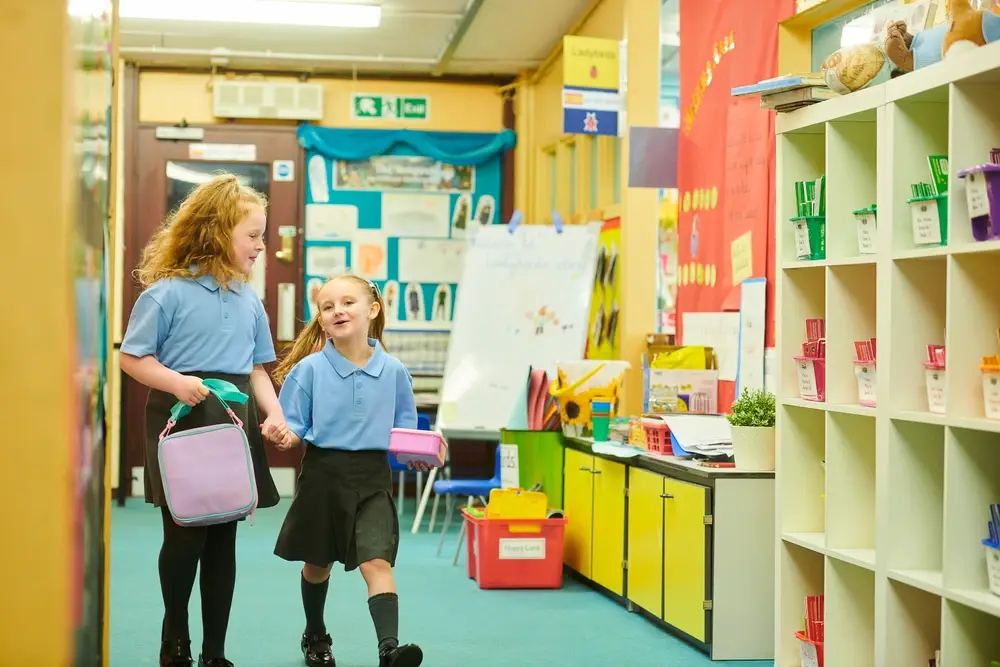
For many, the word play sparks visions of Reception: a space filled with child-led exploration, loose parts, muddy knees, and joyful chaos. But as children move into Year 1, there’s often a swift shift toward something more formal. Desks are rearranged, timetables tighten, and the playful buzz quiets down.
Yet, here’s the thing: there is no switch in a child’s mind that says, “You are now six weeks older, you must now learn formally.” Children don’t stop needing play just because they turn five.
Play Isn’t Just for the Early Years
Play is innate. It’s how children explore, test ideas, process emotions, and make sense of the world. It is not an “Early Years extra.” It is a biological drive, and it’s as fundamental to learning as language or movement.
Play is also joyful, and joy matters – not just for the child but for the adult too. In my previous blog on joy in education, I explored how teacher wellbeing and engagement are closely linked to how we teach. When classrooms are playful, they become more human, more connected, and ultimately more effective.
Research in neuroscience, child development, and education consistently shows that play builds the brain’s capacity for memory, problem-solving, and emotional regulation. It develops language, independence, collaboration, and confidence. For those who worry about the impact on academic achievement, the national curriculum can be taught through play and the results can be incredible. Read our case study for a real-life success story!
Play isn’t about abandoning structure. It’s about using the most natural, powerful tool children have to engage with the curriculum and the wider world around them.
But Is It Rigorous Enough?
There’s a deeply ingrained belief that if children are laughing, creating, exploring, imagining, that means that they aren’t learning “properly.” But this fear is not supported by evidence. The truth is: play can be both joyful and rigorous.
Well-designed, intentional playful learning aligns beautifully with the National Curriculum. It leads to deeper understanding, stronger retention, and genuine curiosity. Play isn’t the opposite of learning – it’s the route to it.
And if you’re worried about accountability, you’re not alone! In fact, a recent study shows that over 57% of school leaders feel unable to fully implement approaches that reflect their values because of accountability pressures. But it is possible. Many schools are showing that a play-based approach can thrive even under the lens of Ofsted. In fact, Ofsted themselves state that there is no set way to deliver the curriculum, and they are increasingly recognising the value of deep engagement, wellbeing, and rich learning experiences.
The Future of Learning Needs Play
The OECD’s Future of Education and Skills 2030 project highlights the need for creativity, collaboration, critical thinking, and emotional resilience. Similarly, the World Economic Forum identifies problem-solving, adaptability, and self-management as key future skills.
But, with such an intensely packed curriculum, where can the time for this be found? How can we do this alongside everything else we have to do? Where are these nurtured best in childhood? The answer to all of those questions is play.
And this isn’t just a policy issue, it’s a rights issue. Article 31 of the United Nations Convention on the Rights of the Child gives every child the right to play, rest, and leisure. Play is not optional – it is essential.
Initiatives like Play England and its 10-year play strategy reinforce this, calling for long-term, systemic commitment to making play part of every child’s daily life, in school and beyond.
It’s Not Always Just “Free Play”
We’re not talking about letting children roam aimlessly. We’re talking about a continuum of playful experiences, from free play to purposeful games and guided inquiry.
- The opportunity for a continuum of playful experiences from free play to play through games.
- Playful provocations that spark inquiry.
- Opportunities that build story structure and vocabulary.
- Exploration that supports science, geography, and collaboration.
- Loose parts, mediums, and construction that develop creativity, spatial reasoning and problem-solving.
- Opportunities to implement the curriculum, revisit learning and embed knowledge.
All of this happens best with skilled, intentional adults who observe, assess, question, model, and adapt. These adults know their curriculum inside out, but they also understand child development. This dual lens allows them to pitch learning in the sweet spot: challenging, but developmentally appropriate.
And yes, there are barriers. But there are ways to overcome them. I explore this further in this previous blog where I share simple, sustainable shifts that can make a big difference.
Why Now?
Because too many children are losing their spark too early. Because post-pandemic education must prioritise connection, wellbeing, and joy. Because we cannot afford to ignore what research and common sense both tell us: children are not mini-adults and they shouldn’t be expected to learn like them.
What You Can Do
Whether you’re a class teacher or a school leader, you can start small:
- Create opportunities for child-initiated learning.
- Blend direct teaching with playful, hands-on activities.
- Make space for movement, choice, and curiosity.
- Talk to children about how they learn best – and really listen.
- Ensure playtime and lunchtimes offer genuine opportunities for outdoor, open-ended play for all ages.
- Challenge yourself to teach for a week without worksheets, without predetermined recording methods, without the standard input-activity-plenary model and see the other ways children show what they know.
And If You’re Still Not Sure…
I get it. Changing how we teach can feel risky. But the greater risk is losing sight of what makes learning truly meaningful for young children.
If you’re still unsure, I invite you to observe a playful Year 1 classroom in action. Watch the engagement. The thinking. The joy.
Let’s reframe what success looks like in Key Stage 1. It’s not just about higher scores but happier learners, more confident communicators, and children who stay curious long after they leave our classrooms.
Play is not a step backwards. It’s a leap forward.
So let’s take that leap – for the children, for their childhood, and for their future.
Best Wishes,
A Playful Educator
If this letter has stirred something in you – curiosity, reflection, or even resistance – I invite you to share it. Send it to your headteacher, your KS1 team, your governors, your Trust Leads. Pass it on to the colleagues who say “play is lovely, but…” and to the ones who’ve quietly been holding onto what they know children really need. Change often begins with a conversation, and this letter might just be the start of one.
And if you’re ready to explore this further, please join me for the virtual Rethinking KS1 Programme. This is an in-depth course where we’ll dig into the research, the pedagogy, and the real-life examples of what playful learning looks like beyond the Early Years. Take a look at some of the feedback from educators who joined our last session:
Thanks Jo! You are so passionate and it’s amazing coming back from training with your head buzzing with ideas!
It was so helpful and purposeful. Has given me a lot of ideas about my new school and has got me extremely excited for what’s to come.
Really well-paced and lots of evidence backed by research. Gave me some time to think about how to arrange my classroom in September for the new cohort.
This was a great session! Jo is an inspiration and she offered lots of practical and helpful advice on how to implement.
Thank you so much for some incredible training. It’s giving me more courage to stand strong in what I know deep down is right for the children. I am so excited for what’s to come in my new school!
Let’s do it for the children. Let’s do it for the skills they will need for navigating their future. And let’s do it for the magic of their childhood.