






This week saw the release of the first Autistic Barbie. The first Barbie was released in 1959, but it was many decades later that the first Barbie with a disability was launched! Read ahead to learn how Barbie’s history reflects changing ideas about identity and inclusion, and why representation plays an important role in children’s experience of play.
The History of Barbie
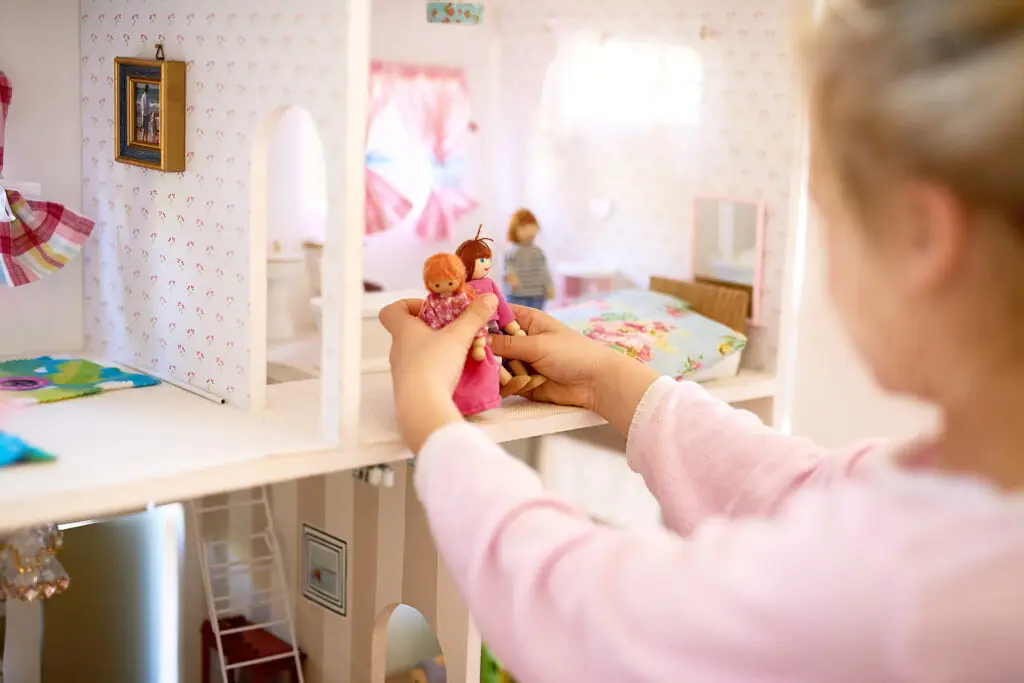
From the beginning, Barbie stood apart from the traditional baby dolls of its time. By taking on the shape of an adult woman, the Barbie doll allowed little girls to create visions of their future through play, rather than simply reenacting caregiving roles.
Before Barbie’s release, market researchers argued that the doll would perform poorly due to concerns about her adult appearance. Yet Barbie’s inventor and co-founder of the toy company Mattel, Ruth Handler, believed passionately in giving children the opportunity to interpret the adult world around them by using the doll as a prop. Indeed, Barbie surpassed all expectations and sold 300,000 dolls in the first year of its release. By 2006, it was estimated that over a billion Barbie dolls had been sold worldwide.
Barbie quickly became one of the most recognised brands in the world and it seems almost everyone of us used to have one (except for me, I was a Sindy girl!). However, controversy has always surrounded the Barbie doll figure, as critics argued that she helped to perpetuate sexist stereotypes, promoted unrealistic body standards, and did not reflect the diversity of the modern world.
The Journey Towards Inclusion
Over the years, efforts were taken to make Barbie more inclusive. In 1968, the first black Barbie doll, “Christie,” was released. In 1997, “Share-a Smile Becky” was introduced, a doll with a wheelchair (although this was later withdrawn). Alongside this, Mattel continued to expand Barbie’s choice of careers, moving on from being a fashion model to becoming a surgeon, a pilot, an archaeologist, and even president. However, critics maintained that these changes didn’t go far enough. When worldwide gross sales fell by 16% in 2014, it was clear that Barbie was losing the hearts and minds of consumers.
In 2016, Barbie finally got a well-deserved makeover. Mattel launched “The Fashionistas” line, which came in 4 body types, 7 skin tones, 22 eye colours and 24 hairstyles, marking a new era of inclusivity through play, promoting a greater sense of belonging and community for every child. As a result, Barbie saw a 7% increase in sales after several years of steep decline.
As part of this new movement, Mattel also began to promote positive disability representation, introducing a doll who is blind, one with Down Syndrome, another with Type 2 Diabetes, and others with Hearing Aids and artificial limbs. Each new addition has been broadly welcomed as a positive step towards inclusion, ensuring that children with disabilities can now play with a Barbie doll that looks like them.
Introducing Autistic Barbie
To create the first-ever Autistic Barbie, Mattel worked in partnership with the Autistic Self Advocacy Network (ASAN), a US-based charity that advocates for the rights of the autistic community. Their aim was to allow more children to ‘’see themselves in Barbie”’ and feel represented.
The new doll has a number of unique features and accessories:
- Altered eye gaze – the dolls eyes gaze slightly off centre to represent the fact some autistic people avoid direct eye contact.
- Bendable elbows and wrists – to allow increased physical movement such as hand flapping or stimming.
- A fidget spinner – fidget toys can be used to help reduce stress.
- Noise cancelling headphones – some people with Autism choose to wear them to reduce sensory overload.
- Tablet – this shows symbols representing an augmentative and alternative communication system, again used by some people with Autism.
- Loose fitting clothes – to minimise skin to fabric contact and reduce sensory overload.
These features only apply to some people, as no two people with Autism are ever the same. However, it seems some things will always remain the same – in Barbie’s world, of course the fidget spinner and the tablet have to be pink!
Announcing the launch of Autistic Barbie, Jamie Cygielman, Global Head of Dolls, Mattel, says it is the latest addition to the diverse Fashionistas collection and demonstrates the company’s ongoing commitment to representation and inclusion.
“Barbie has always strived to reflect the world kids see and the possibilities they imagine, and we’re proud to introduce our first Autistic Barbie as part of that ongoing work.
We engaged with the autistic community throughout the design process, always mindful that autism is experienced differently by every individual and is not always visible. The elements of this doll reflect how some people on the spectrum may experience and express the world.”
The use of “some” here is key – no doll can truly represent all. But this is the same of any Barbie doll. That is why there are so many of them. However, I think the key difference is that other representations of careers, lifestyles, or disabilities often have unique visual features such as wheelchairs, stethoscopes, hearing aids, or uniforms. Yet, people with Autism do not all share the same visual signifiers and that is what makes this controversial.
Personally, I feel that any increase in representation is a positive step. Barbie’s evolution shows how inclusive toys can make play more enjoyable and meaningful for children. But there is always room to grow. I hope Mattel goes on to release more than one Autistic Barbie to show that Autism is not a single, fixed experience, but one that varies from person to person.