





Play Therapy can be an effective tool to help children and young people with a range of social, emotional and mental health needs. This case study showcases the impact of Play Therapy for pupils with emotional barriers to school attendance (EBSA) and adverse childhood experiences (ACEs).
Setting the Scene
Jamie, age 8, a quiet and creative child, struggled with consistent attendance in school due to intense anxiety. Having experienced multiple ACEs – including parental separation, family instability, and exposure to conflict – Jamie found school overwhelming and often became distressed, particularly in group settings. This led to increasing school avoidance and high levels of separation anxiety. Jamie was referred to play therapy after other attempts to support him in the classroom were unsuccessful.
Our Approach
Stage 1: Building Safety and Trust through Play at Home
Our first objective was to establish a trusting therapeutic relationship with Jamie in a familiar environment to reduce anxiety and begin exploring feelings around school and separation.
- Nurturing the Therapeutic Relationship through Child-Led Play
The therapist engaged Jamie with a selection of toys, including puppets, stuffed animals, and building blocks, allowing Jamie to choose the play activities. In these early sessions, the therapist followed Jamie’s lead, reflecting on his actions and mirroring emotions to help him feel safe and understood. This non-directive approach allowed Jamie to express himself freely and begin to build a bond with the therapist. - Storytelling and Projection through Puppetry
Using animal puppets, Jamie and the therapist created a story about a character named “Sammy the Fox,” who faced fears and anxieties around leaving his family to go on adventures in the “big forest” (symbolising school). Through Sammy, Jamie was able to project his fears and feelings without directly discussing himself, giving the therapist insight into his emotional state. Sammy’s story included themes of bravery, vulnerability, and connection, helping Jamie start to process his fears in a safe and controlled way. - Creating a “Safe Box” Together
Jamie and the therapist decorated a small box with comforting colors and symbols. Jamie was encouraged to put objects, like small toys or special notes, in the box that represented things that made him feel safe and calm. This “safe box” became a tangible tool Jamie could use at home and was later introduced as a resource to take with him on his journey back to school, fostering a sense of control and security.
The Results
After three weeks of home-based sessions, Jamie began to open up about his fears in subtle ways through Sammy the Fox, sharing anxieties about being away from home and about the “big forest.” He showed less guardedness, and both Jamie and his parents felt more optimistic about him exploring feelings related to school.
Stage 2: Emotional Processing and Skill-Building in a Neutral Space
After establishing a strong therapeutic relationship, we began to help Jamie process emotions and build coping skills in a safe, non-school environment to reduce school-related anxiety.
- Sand Tray Therapy
Using a sand tray filled with small figurines (representing people, animals, and places), Jamie was encouraged to build scenes depicting his feelings around school. Through these scenes, Jamie acted out his fears and began developing alternative, more positive narratives. For instance, in one session, Jamie created a “safe village” that protected him from the “school dragons,” symbolising his anxieties. Through gentle prompts, the therapist helped Jamie explore ways the village could handle challenges, building a foundation for resilience. - “Feelings Exploration” with Art Materials
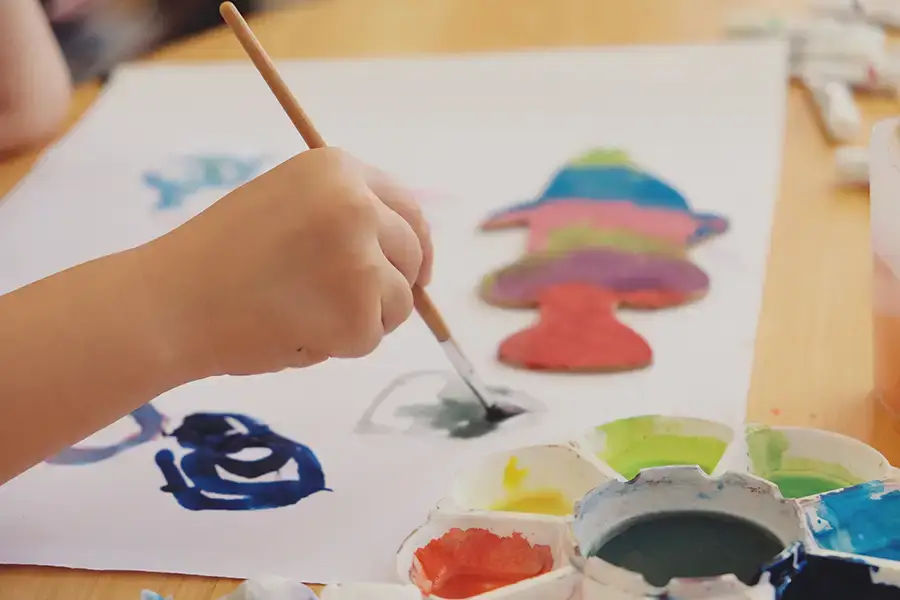
Jamie was provided with coloured markers, clay, and paper to represent different emotions visually. The therapist guided Jamie to create drawings or clay figures for each emotion, which he described as “worry monsters” and “brave heroes.” This activity helped Jamie externalise and identify his complex emotions, especially fear and sadness, and recognise that these feelings could be managed. The “brave heroes” represented parts of himself that could handle difficult feelings, fostering a sense of inner strength. - Gradual Exposure through Role Play
To help Jamie reframe his school experience, the therapist introduced gentle role-play activities where they pretended to go on “school adventures” together. These adventures included packing a small bag, “walking” to an imaginary classroom, and meeting “friendly teachers” (role-played by Jamie and the therapist). This playful, gradual exposure allowed Jamie to practice school-related routines without the real-life pressures and gave him confidence in managing these situations.
The Results
Jamie began expressing less fear about school during the sand tray and role-play sessions. The art-based activities helped him visualise and manage his emotions, and he started showing signs of increased emotional regulation. Jamie’s parents noted he was becoming more comfortable discussing school, suggesting readiness for a short, supported school visit.
Stage 3: Supported Re-Entry to School
Using a number of intervention strategies, we helped Jamie gradually transition back into the school setting with play therapy support to foster a sense of security and empowerment.
- Play-Based School Visits
Jamie’s first visit to school was designed as a “play adventure” rather than a formal visit. The therapist and a trusted staff member met Jamie at the school entrance and engaged him in an interactive story where they were “brave explorers.” They walked around the school grounds, meeting key staff who joined the game, creating a fun, non-threatening way for Jamie to re-enter the environment. Jamie was given a “magic bracelet” (a calming object he chose) that represented his “safe box” and reminded him of his support network. - Creating a Safe Spot in the Classroom
Working with Jamie and his teacher, the therapist helped establish a “safe corner” in Jamie’s classroom, stocked with sensory items, soft toys, and colouring materials. This space was introduced as Jamie’s personal “safe fort” where he could go anytime he felt overwhelmed. He used items from his safe box in this area, reinforcing feelings of security and providing a designated, comforting place for him at school. - Personalised Visual Schedule and Transition Rituals
To help Jamie feel more in control of his school day, the therapist worked with Jamie and his teacher to create a visual schedule that allowed him to see the flow of his day and anticipate transitions. A small ritual was added where Jamie and his teacher would “high-five” his magic bracelet at the start of each day, grounding him and reinforcing his connection to his family and therapist.
The Results
Over several weeks, Jamie gradually increased his time in school, initially attending just mornings and later extending to full days. The playful and gradual approach to re-entry helped Jamie manage his anxiety. His “safe corner” became a reliable resource, and the visual schedule minimized stress around transitions. Jamie’s parents and teachers observed improvements in his ability to self-soothe and engage in learning, and Jamie began forming connections with peers, helping him reintegrate socially.
Looking Forwards
Play therapy for pupils provides a non-threatening way to process emotions and build resilience. Through creative, play-based interventions, Jamie gained emotional tools to manage his anxieties, developed confidence, and gradually felt safer in the school environment. His “safe box” and “safe fort” became long-term resources that reinforced his ability to self-regulate, illustrating how play therapy can empower young children with EBSA and ACEs to face challenges and re-engage with education.
To find out more about Play Therapy for pupils in your school, please get in touch with our Creative Arts Therapy team.