



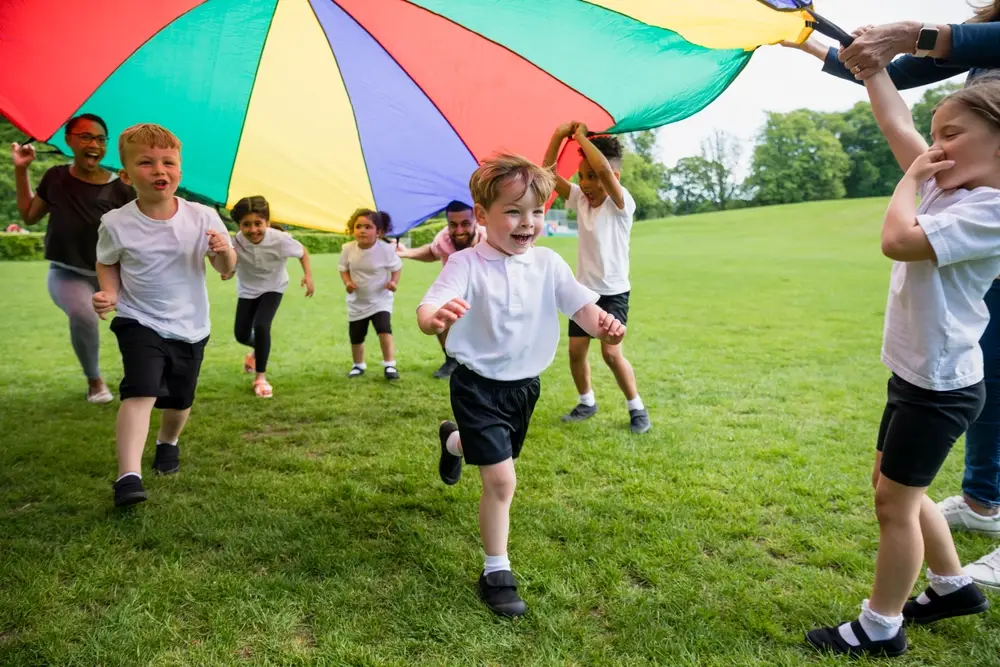

Those of us working in education will recognise the crucial importance of play to a child’s learning and development. However, in recent years, an increasing number of schools are reporting a concerning trend: children arriving at school struggling with basic play skills. This shift reflects a broader, more pressing issue, which is that children today are missing out on something vital for their mental, emotional, and social development: real play.
Increasingly, health professionals are speaking out on the catastrophic impact of screens on children’s mental health, brain and speech development. Yet amidst the growing prevalence of screens in everyday life, many parents feel uncertain about how to engage in play with their children. As playtime becomes more digital, traditional ways of connecting, like imaginative games and physical play, seem to be slipping through the cracks. But the importance of play has never been clearer. Play is not just a fun activity, it’s an essential tool for emotional regulation, healthy attachment, and building resilience.
Why Play Matters More Than Ever
Children today are facing mental health challenges at higher rates than previous generations. Anxiety, depression, and emotional dysregulation are on the rise, and many young people are struggling to manage their feelings. The increasing reliance on screens, from video games to social media, has replaced critical face-to-face interactions, and as a result, many children are missing out on opportunities to develop essential social skills, manage emotions, and express their inner worlds.
Play is how children process and understand their feelings. It is the language of childhood, a symbolic expression of what is going on in their lives. Whether it’s through role-playing with dolls, creating imaginary worlds with toys, or simply running around outside, play helps children explore and make sense of their experiences in a way that words often cannot.
I’ll always remember when my daughter first started in reception, her games at home became “Mummy you be the child, I’m the teacher, now sit down and cross your legs!” She enjoyed playing around with the new roles, rules and structures she was now encountering on a daily basis, and this play was all part of her processing those new experiences.
The Role of Parents in Play
Parents are not just caretakers, they are the most important figures in shaping their children’s play experiences. According to developmental psychologist Erik Erikson, play is a space where children can work through their experiences and gain mastery over their feelings. Through play, children learn to express themselves, understand their emotions, and build resilience.
When parents engage in play alongside their children, it does more than simply pass the time, it builds trust and strengthens the emotional bond. Ideally, parents should be their children’s first and best playmates. When a parent plays with their child, they aren’t just supervising, they are co-creating an experience that promotes emotional expression and cognitive growth.
Play as a Safe Haven for Emotional Regulation
One of the key benefits of play is its ability to help children regulate their emotions. Many children find it difficult to articulate their feelings, especially when those feelings are complex or overwhelming. But through play, children can express themselves in ways that are more natural and accessible.
For example, a child might act out a stressful situation using toys or figures, playing out a scenario where they feel scared, confused, or angry. This is not only a way for the child to process their feelings but also an opportunity for parents to offer comfort and support. By playing alongside their children, parents can create a space where emotions are validated and explored.
Studies show that during play, children often recreate scenarios related to real-life events – both positive and negative. This allows them to explore their emotions in a safe environment, gradually making sense of complex feelings. For example, a child who has experienced a difficult transition, like moving to a new home or a family breakup, might play out scenes of loss or separation through dolls or action figures. This play serves as a vehicle for emotional release and helps children build a stronger sense of self-awareness.
The Importance of Play for Emotional and Cognitive Development
When parents engage in play, the benefits extend far beyond just emotional regulation. Play also fosters cognitive development, helping children think creatively and develop problem-solving skills. Imaginative play encourages children to use their creativity, think critically, and imagine new possibilities. Active, reciprocal games such as batting a balloon to each other encourages healthy relationships and navigating everyday feelings such as failure, mastery, team work and other peoples emotions all which build resilience and healthy navigation of the world around us.
Studies have shown that children who engage in regular, meaningful play tend to perform better in school, have stronger social skills, and display higher levels of self-confidence. They are better able to handle challenges, whether academic, social, or emotional, because they have developed a strong foundation of creativity, resilience, and emotional intelligence.
Building Healthy Attachments Through Play
Healthy attachment between parents and children is the foundation for emotional wellbeing. When parents engage in play, they are reinforcing their role as a secure base from which their children can explore the world. Children who feel secure in their relationship with their parents are more likely to take risks, try new things, and face challenges with confidence. They know that their parents are there to offer support and comfort when needed.
The act of playing with a child whether it’s sitting down to build something together, engaging in an outdoor activity, or simply sharing a quiet moment of imaginative play sends a powerful message, “I am here for you”. This deepens the emotional connection and lays the groundwork for healthy relationships throughout the child’s life.
How Parents Can Play: Creating Connection, Encouraging Creativity
As a parent myself, I understand the barriers we face, especially time constraints. Simply stopping to give our children time and space can feel difficult, let alone creating opportunities for playful interaction. After school, many children want to unwind on their screens, which can also give us a chance to get things done or take a moment for ourselves. In balance, this is completely okay. However, from personal experience, I know how easily that time can start to take over. As my mind becomes fuller, my capacity to truly engage with my children can feel increasingly difficult to access.
I also believe Parents often feel “deskilled” when it comes to play. Many believe that play is something children should “figure out” on their own or that their role is limited to providing toys or supervision. But the truth is that children thrive when their parents are actively engaged in their play. The best type of play occurs when parents sit alongside their children, listen to them, and follow their lead. It’s not about controlling the game or dictating the rules it’s about co-creating an experience where the child feels seen, heard, and understood.
Parents don’t need to be experts in the latest games or have endless ideas for creative activities. The simple act of being present, showing curiosity about what the child is creating, and participating in their imaginative world is what helps to foster a deep connection. Children often become more creative when their parents are involved because it encourages them to stretch their imagination and test their ideas in a safe and supportive environment.
How The Family Play Programme can help
The Family Play programme uses really simple games to aid connection, nothing complicated or expensive, just simple. It also provides an opportunity for parents to learn and reflect on emotional regulation, co-regulation, what barriers there are to play and how they can seek further support themselves to be better placed to engage with their children.
It can be helpful to be reminded that moments of playful connection are actually critical tool for emotional development, social skills, and mental health. When parents engage in play with their children, it builds secure attachments, fosters creativity, and helps children develop resilience and emotional regulation.
If you would like to find out more about The Family Play Programme, please get in touch via cpeadmin@oneeducation.co.uk
To find out more about the importance of play, or learn more about our services, please click here.