










Whilst Speech, Language and Communication Needs (SLCN) are increasingly being recognised in schools, many pupils’ needs continue to go unrecognised in many cases. These unmet needs can have a profound impact on learning, behaviour and wellbeing, which means early identification of SLCN is a crucial first step in ensuring pupils receive the support they need to thrive.
As highlighted in Helen’s recent blog on Developmental Language Disorder, SLCN can often be misidentified. Pupils with DLD are often thought to have something else. For example, if they struggle with words, they may be thought to have dyslexia. As it can impact on many areas of learning, they can be thought to have a moderate learning delay. Or, if a child experiences difficulties with social language and friendships, they may be referred to CAMHS.
In a recent report published by Speech and Language UK (November 25) that ‘there are two million children struggling with speech and language in the UK today – up 42% in just four years, from 1.4 million in 2021, due to the ongoing impact of Covid and a decline in the availability of community support.’
To help schools navigate the complexities of identifying SLCN, our Speech and Language Therapy Team has put together a practical, easy-to-use resource to support early and effective identification.
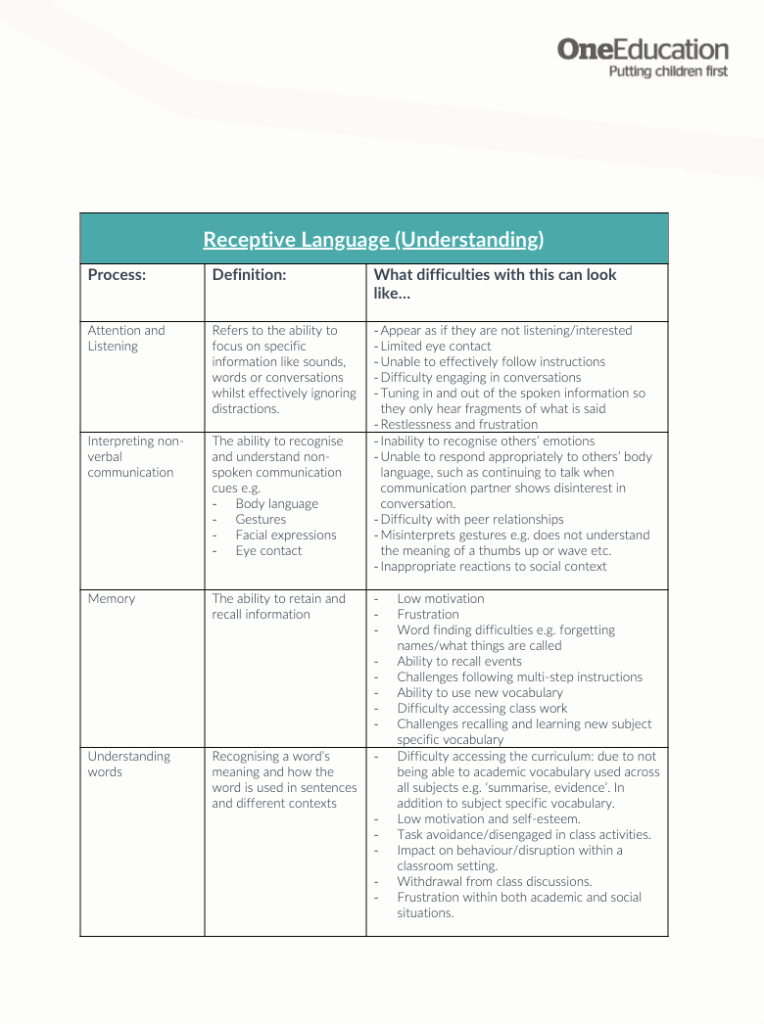
In some cases, it may be obvious the area of Speech and Language that they may be struggling with, such as speech sounds. In other cases, it may be more difficult – for example, when children have difficult understanding sentence structures, they may appear to not be listening whilst they are trying to process what they have heard. Similarly, pupils may appear rude when they say things bluntly as they have not learnt some social use of language rules. Recognising this distinction is crucial, as focusing on the underlying communication difficulty allows adults to respond in ways that genuinely support the child’s needs.
If you would like any help or support, please get in touch.