












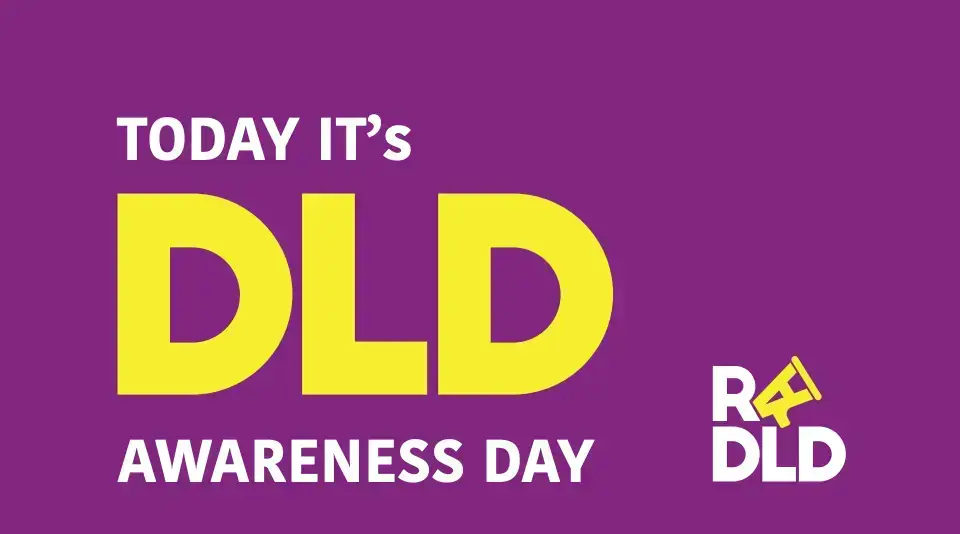

This Friday, 17th October 2025, is DLD Awareness Day.
Two years ago, I wrote a blog giving a summary of Developmental Language Disorder (DLD) and what it might look like in schools. Since the term was only introduced in 2017, I knew some people might not yet be familiar with it. The condition itself is not new, but due to limited awareness, DLD has often gone unrecognised, under-diagnosed, and mistaken for other conditions.
When I sat down to review and update the blog, I was disheartened as I do not feel that much has changed. Sadly, DLD continues to be misunderstood and misdiagnosed.
With this in mind, this blog aims to set out a clear definition of DLD, highlight the key facts, and share strategies to support a wide range of pupils who might be affected – not just the few who have been formally diagnosed. Please note, this list is not exhaustive, nor is it a substitute for specialist diagnosis and support. However, I hope it can be used as a good starting point for identifying signs of DLD and responding effectively.
This blog also includes a free infographic for you to download and share with colleagues, helping you to raise awareness and improve support for pupils with DLD in your setting.
What is Developmental Language Disorder?
Developmental Language Disorder was previously known as Specific Language Impairment, but this did not accurately describe the condition. To understand the term, it is important to look at its component parts:
- Developmental
It begins in childhood and it does not go away.
- Language
It can affect some or all of the following areas: Social Language, Discourse, Sentences, Word, Speech Sounds, and Learning and Memory.
- Disorder
It is not something that children will “grow out of,” rather it will continue to have an impact on them in adulthood. (Some children may have a developmental language delay – with the right support, they may close the gap with their peers, but this should not be confused with DLD).
What does DLD look like?
DLD emerges in childhood. It is quite a common condition with research indicating that around 1 in 14 children have DLD – equivalent to two children in a class of 30. It is thought to affect girls and boys in similar numbers. DLD is a profile, which means no two children with DLD will have the same profile of difficulties and children may not have difficulties in all areas.
For this reason, DLD can be difficult to identify. Pupils with DLD are often thought to have something else. For example, if they struggle with words, they may be thought to have dyslexia. As it can impact on many areas of learning, they can be thought to have a moderate learning delay. Or, if a child experiences difficulties with social language and friendships, they may be referred to CAMHS.
One of the reasons that DLD is under-diagnosed is that schools do not look for it. We are much more aware of other better-known conditions and their presentations. Yet, DLD is more prevalent than all of the conditions mentioned above. So, when we see a pupil experiencing these challenges, it is imperative that we consider whether it is a language disorder that is underpinning the child’s difficulties.
Another thing to consider is the profound effect that DLD can have on a child’s behaviour. A very high percentage of young people in the youth justice system have undiagnosed DLD (figures range between 30 and 90%). Pupils’ behaviour is often misunderstood. For example, pupils who have difficulty understanding what is being said to them may appear uncooperative; those who have difficulty using words to resolve conflict may become more physical; and pupils who struggle to ‘read between the lines’ may seem to say the wrong thing or appear not to care. By learning how to spot the signs of DLD, we can ensure these pupils receive the right support and prevent behavioural issues from escalating.
How can we identify DLD?
One way to begin to identify pupils with DLD is to screen all pupils for language difficulties. There are pros and cons to screening pupils and whilst they are valuable tools, they should be used with caution. On the positive side, it helps to identify students who may be masking and would otherwise be missed. It can also track changes (or lack of change) as pupils progress through school. It is generally a thorough approach that can be used proactively and confirm pre-held ideas.
On the other side, screening comes with a cost – if not the screener itself, then the staffing it requires. The process also takes time. Additionally, there can be false negatives and positives. It also means agreeing on the next steps that need to be taken, although language needs may change over time.
DLD Awareness Day is crucial in helping to raise the profile of this condition, equipping professionals with the knowledge, skills and understanding to identify and support pupils in the right way. Statistically, there are two pupils in every class with DLD, but I suspect many schools would currently struggle to identify them. But working together, we can change this – simply by starting a conversation. The more we talk about DLD and consider it as a possible diagnosis, the better we can support these pupils and improve their long-term outcomes.
Download your free DLD resource
So how can you raise awareness of Developmental Language Disorder in your setting? This infographic has been created to help! This resource explains how you can support pupils with DLD in 6 key areas: Social skills, Receptive Language, Expressive Language, Vocabulary, Learning and Sensory.
As I designed this to be used in class by all staff, I have deliberately only listed 4-6 points in each area so as not to be too overwhelming. However, there are many more points I could add and will do so if requested!
If you would like to discuss screening pupils or how to support pupils with targeted interventions, please get in touch with our Speech and Language Therapy Team via helen.marriott@oneeducation.co.uk