














The Curriculum and Assessment Review marks a major blueprint for England’s education system. It reaffirms that our national curriculum and assessment framework have many strengths, but calls for targeted reforms to raise standards, close gaps, and modernize learning. The government’s response broadly welcomes the recommendations. As DfE ministers note, they will be “guided by the Review’s principles” to make the curriculum world-leading and accessible to all.
Educators can expect significant updates over the next few years – a refreshed national curriculum (2027) and new exam specifications (2029), alongside new assessments and revised performance measures. Teachers and school leaders should prepare for these changes by engaging with consultations, participating in training, and sharing experiences.
Our staff are already discussing the report’s recommendations and will contribute feedback on how best to implement them. Our expert commentary can be read here, as we share our thoughts on the Review’s recommendations and how this will impact the future of education.
The Curriculum and Assessment Review sets out an ambitious and future focused vision for a high-quality, coherent and inclusive education system. As an organisation committed to evidence-informed practice, we welcome the intention to blend strong subject knowledge with the personal, social, and digital competencies that children and young people need to succeed.
We strongly welcome the Review’s emphasis on inclusion as a guiding principle. A curriculum that actively considers the needs of all learners is essential for equity. The proposals place value on early identification, coherent progression, and targeted support for pupils who may find literacy or numeracy more challenging. This inclusive stance reflects both national evidence and what we observe across our own settings.
We also welcome the focus on real-world competencies such as financial education, digital literacy and oracy. These areas align with international research, including the World Economic Forum’s future skills agenda, and they reflect the changing demands of life, work, and citizenship.
Importantly, we welcome the acknowledgement within the Review that the way the curriculum is delivered matters as much as the content itself. Children learn most effectively when teaching is connected to real-life experiences and when learning is active, practical and meaningful. We are pleased to see space for more experiential, hands-on and enquiry-driven approaches, which support deeper understanding and higher engagement, particularly for pupils who do not thrive in task heavy or rote learning environments.
While the vision is positive, there are several areas that require careful consideration as the sector moves forward. Schools may want to consider that:
- Inclusion remains central in practice. Expectations of progress must be matched with adaptive teaching approaches that support learners with diverse needs.
- Breadth and creativity are not unintentionally reduced. New expectations must not narrow opportunities for the arts, design, humanities or practical learning.
- Assessment changes remain supportive rather than burdensome. Diagnostic tools should inform teaching, not increase workload.
- Resource and professional development needs are fully recognised. Staff need time and training to deliver strengthened digital, financial and oracy provision effectively.
- Hands-on, play-based and enquiry-driven learning continues to be valued. There is a risk that the drive for standardisation can sometimes unintentionally promote more task focused or rote learning approaches. Leaders must safeguard time, space and freedom for experiential learning.
- Curriculum delivery remains engaging, meaningful and relational is key to securing the best outcomes.
While immediate structural change is not required, this is a moment for reflection and readiness. To support strategic readiness, we pose five reflective questions for school and trust leaders.
- How will we protect time and capacity for staff to engage meaningfully with curriculum redesign -including training, collaborative planning and reflection – without adding to workload in an already pressured system?
- What will coherence look like across our school or trust, and how will we ensure that subject progression, assessment approaches, and enrichment opportunities align from early years through to key stage transitions – whilst being mindful of pedagogy and the way in which the curriculum is delivered?
- How will we ensure equity in access to the refreshed curriculum, particularly for pupils with SEND, those from disadvantaged backgrounds and those who may need additional scaffolding to benefit from increased depth and subject mastery? Consider how effectively assessment systems identify gaps, misconceptions or needs early and how quickly is support put in place to close gaps.
- What structures will help us monitor the impact of curriculum and assessment changes, not just on attainment but on student engagement, wellbeing, attendance and behaviour – and how will we respond if the data shows emerging pressure points?
- How will we preserve and strengthen teacher autonomy and professional judgement, ensuring staff feel supported and empowered to adapt the curriculum to local context while staying aligned with national principles?
In summary, One Education welcomes the direction of the proposed changes. However, the scale of implementation should not be underestimated: careful planning, resourcing and sustained support from the government will be essential to ensure these reforms genuinely strengthen outcomes for all pupils, staff and school communities.
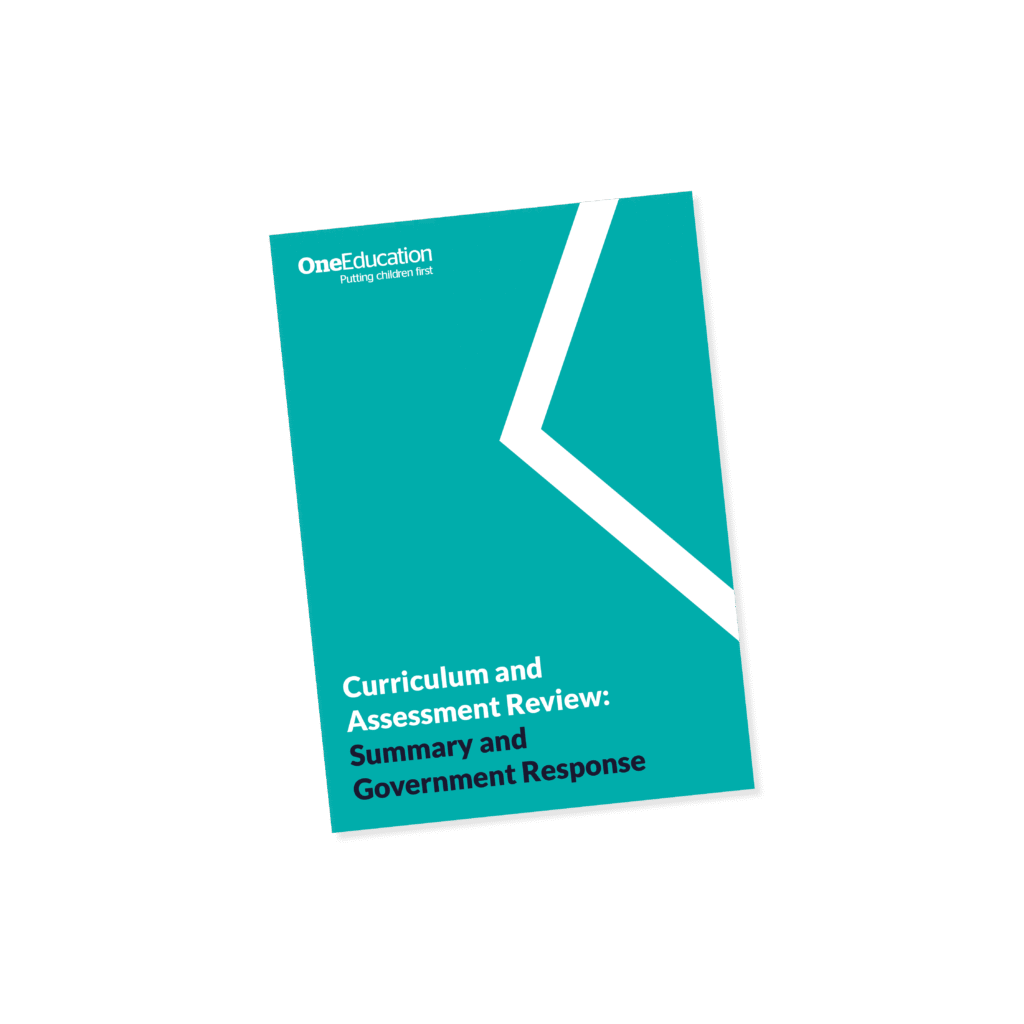
To learn more about our thoughts, please read our summary and response.