









At One Education, we know that reading is more than an enjoyable pastime – it is the golden thread that runs through a child’s entire learning journey, giving them the skill to access the learning and knowledge required across a wide-ranging curriculum. We need to consider how reading for pleasure experiences impact on a pupil’s reading journey, bringing about their identity as a reader and influencing their reading preferences and habits.
In this blog we will examine current research on reading for pleasure and consider what is needed to create readers who are self-aware, able to progress in their reading journey and use reading strategies in a wealth of different ways to improve their wellbeing and life learning.
Reading Enjoyment: A Declining Picture
Recent research by the National Literacy Trust, amongst others, has showed a worrying decline in children and young people reading for pleasure. In 2025, the percentage of children and young people who told us they enjoyed reading was at its lowest in 20 years. Just 1 in 3 (32.7%) children and young people aged 8 to 18 said that they enjoyed reading in their free time. This represents a 36% decrease since 2005. The decline has been especially sharp among primary-aged children and boys aged 11 to 16, groups who have traditionally been more vulnerable to disengagement from reading.
Fewer than 1 in 5 (18.7%) 8- to 18-year-olds reported reading something daily in their free time in 2025—the lowest level recorded and nearly 20 percentage points lower than in 2005.
Even among children aged 5 to 8, daily reading rates dropped by 3.4 percentage points in the past year to 44.5% and have fallen by 9.1 percentage points since 2019.
Next year sees the DfE and National Literacy Trust teaming up to proclaim 2026 as ‘The National Year of Reading’ to promote the importance of reading for pleasure. They hope that by engaging new audiences, raising awareness and changing attitudes to improve the nation’s reading culture they will ultimately reverse the reading decline.
Reading Volition: Vital for Future Success
Reading is not just another subject – it is the foundation of all learning. How well pupils engage with reading not only impacts greatly on their reading successes through the curriculum, but also their volition to read to find out information or for relaxation and enjoyment. Therefore, pupils’ attitudes towards reading for pleasure are vital in cementing a positive relationship with reading for life. How we bring about this reading relationship is key.
We live in a world which offers more quickly accessible and perhaps less effortful alternatives to reading. As Cremlin et al (2025) highlight, the global decline in reading attitudes and frequency is influenced by factors such as digital media, lack of reading role models, overcrowded curricula, and socio-economic barriers. It is the role of the educator to teach pupils about the vast scope of reading and to support them to set their own preferences, being shown the benefits of reading but letting the pupils themselves set their own parameters.
To do this effectively we must support young people to build their reading identities – how they view themselves as readers, their beliefs, habits, and experiences of reading. This idea was championed by Daniel Pennac (2006) to empower the reader to their reading rights: to read what, where, when and how they would like to. While it may be necessary to be selective over which of these rights we fully embrace (allowing pupils not to read or only read quietly may not support their development), the theory of encouraging pupils to find their own way as readers (perhaps with some quite guidance in the background) is the important factor.
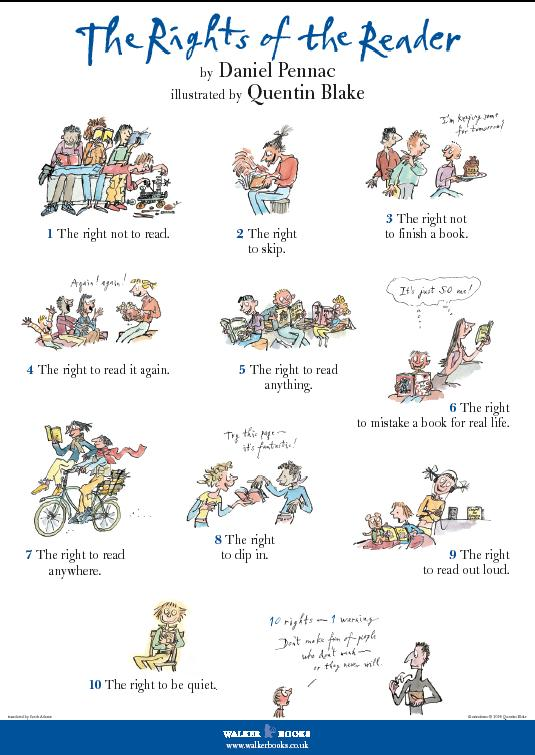
A child’s sense of themselves as a reader is constructed and reconstructed through the literacy activities in which they participate, both those required by school and those in which they choose to engage. Without volition, children risk disengagement, limiting their opportunities for success in school and beyond.
What can we do to create ‘reader identities’?
- Increase motivation and ownership of reading through showcasing the ‘what, where, when, why and how’ of reading for enjoyment.
- Develop a breadth of reading experiences, looking at a range of different viewpoints.
- Reduce restrictions around reading and give pupils ownership.
- Ensure reading for pleasure is well-crafted across the curriculum and is managed well, by knowledgeable reader- teachers.
As reading teachers and leaders, we must facilitate, model and deliver a range of experiences, as a class, as a reading community and through engagement with parents and wider stakeholders. The management of the reading aloud lesson is key to ensure all pupils enjoy the process; using engaging texts, encouraging links to be made and connections to the pupils themselves, the wider world and intertextually. The whole ethos of reading for pleasure is perfected through the teacher who knows about books, authors and uses reading experiences carefully to engage.
How else can we increase reading volition?
- Ensure access to diverse, high-quality texts which widen reading experiences, allowing pupils to experience a range of text types to support them to develop preferences and see themselves in books; being the mirrors, windows and sliding glass doors (Bishop, 1990) for pupils’ reading experiences.
- Support agency in choosing what to read. Pupils should have their say in not only their own reading choices, for example being given the opportunity to choose reading for pleasure texts alongside an assigned phonics reader from an early age, but also being given free choice from the library with access to support should they need it, for example by accessing recommendations from an adult or peer.
- Give the time and routines that protect reading opportunities so that reading time can be opted into, not lost within a busy curriculum, but raising the profile and adding value by prioritising reading for pleasure time.
- Support reflection and personal connection with texts is vital through high quality book talk, discussion and opportunities to share recommendations and interact with authors.
- Prioritise social interaction around reading experiences as a partnership, group or whole class. This might also include reading champion role models, reading partners, book clubs, whole-class reading and library activities with other adults or peers.
Moving Forward: Creating a Reading Culture
To address the decline in reading for enjoyment, schools must reflect and consider their reading for pleasure offer and improve their understanding of the research to integrate volitional reading into policies and everyday practice. This includes ensuring equitable access to resources, time, and support, and sharing evidence-based approaches that strengthen reading engagement globally. One key element of this as a teacher is to ensure that your own knowledge of literature is of a good standard. Keeping abreast of new titles, authors and genres is essential to be able to engage with pupils effectively about reading.
The Teachers as Readers research (UKLA, 2008) found that teachers who developed their own reading repertoires to truly be a reading role model made a real difference to children’s knowledge of authors and poets, their desire and motivation to read, the quality of classroom practice and their understanding of the significance of reading for pleasure. This brings huge benefits to both staff and pupils alike.
Practical Steps for Schools
If you are keen to improve your school’s practice and put reading volition on the agenda to develop reading for pleasure in the most effective way, you can make sure that the following first steps are in place, to bring about a reading culture and understanding across all stakeholders:
- Make reading part of school life – embed books into routines, displays, and conversations. Consider what whole-staff training is required to create a collaborative approach.
- Involve parents and carers – provide information linked to research on the benefits of reading for pleasure with their children, its importance and suggest texts regularly and often, ensuring parents have access to books from the school library should they wish. Frank Cottrell-Boyce, as poet laureate, alongside The Book Trust is addressing the decline in reading for pleasure with our young people by championing the need to educate parents of the need to share books with children from a young age. This should not stop once children are independent readers. The emotional and educational benefits of reading together should continue to better the engagement with reading that social reading opportunities create.
- Celebrate reading – hold whole-school events that spotlight books and stories to fully embrace the enjoyment reading can bring, engaging and motivating the children through interesting and inspiring activities, listening to authors and recognising their reading choices. National Poetry Day 2025 takes place on Thursday 2nd October, with the theme of ‘Play’ so why not take part in whole-school poetry reading for pleasure?
- Raise the profile of books – ensure all stakeholders see reading as central to learning and wellbeing, with staff championing this through publicising their own reading preferences, sharing in reading experiences as reader role models and investing in regularly updating book stock in classrooms and the library. Consider how the reading environment promotes books to pupils in all areas of the building.
Reading for pleasure is not an optional extra. It underpins learning, wellbeing, and future success. Moreover, developing a reader identity is important to support pupils in accessing reading in a way that works for them, giving them the understanding that they can still change and develop their reading habits, but that enjoyment of reading comes from their ongoing reading choices and experiences which transfer into their reading for meaning.
Looking for further support?
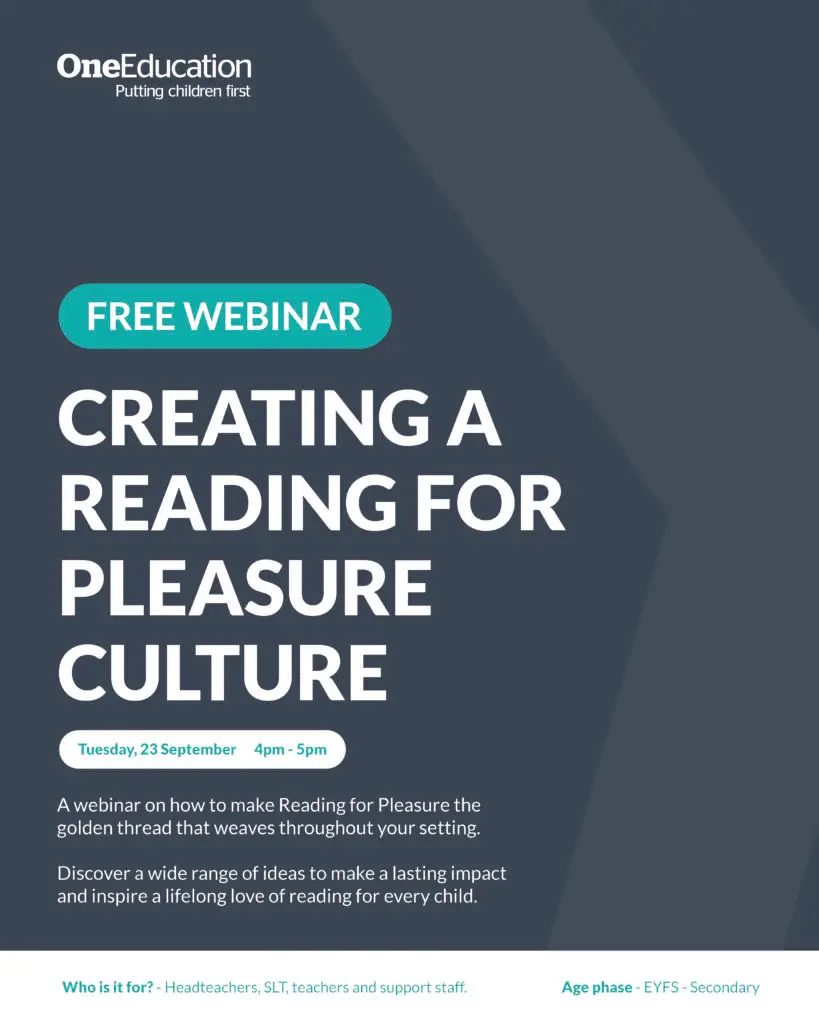
If you would like to learn more about effective reading for pleasure provision with other like-minded colleagues, please register for our FREE Webinar- Creating a Reading for Pleasure Culture on Tuesday 23rd September 2025 at 4-5pm by accessing this link: https://www.oneeducation.co.uk/event/creating-a-reading-for-pleasure-culture/
The One Education Reading Award is also an excellent way to showcase your reading culture and instill good reading practice across the school by accessing a wealth of resources, support and training in current best practice. Find out more here.
One Education offers bespoke reading support to schools and settings as well as curriculum development, CPD and training.
Email alice.pepper@oneeducation.co.uk or telephone 0161 276 0160 for further information or fill out the contact form below.