




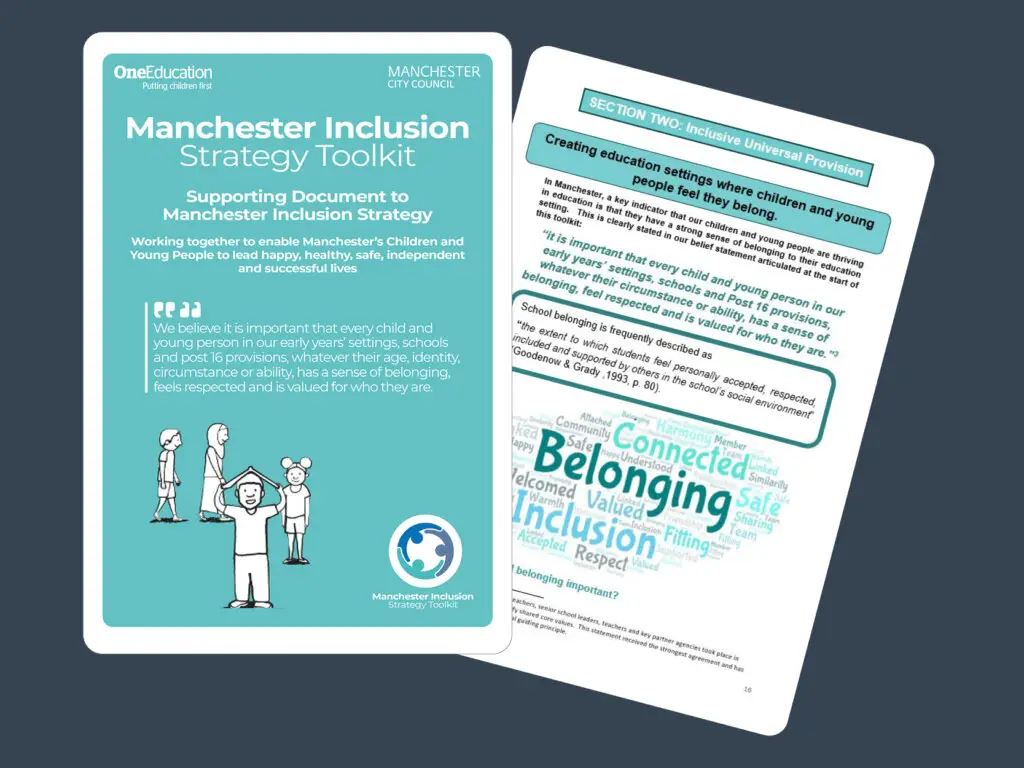








As schools are increasingly reflecting on their provision for vulnerable pupils, we have created a SEND self-audit to support you to do this.
This is a practical tool that enables schools to reflect on and evaluate the effectiveness of their current provision for pupils with Special Educational Needs and Disabilities (SEND). It supports schools to review systems, practices and outcomes, helping to ensure that vulnerable pupils are being identified early and supported effectively.
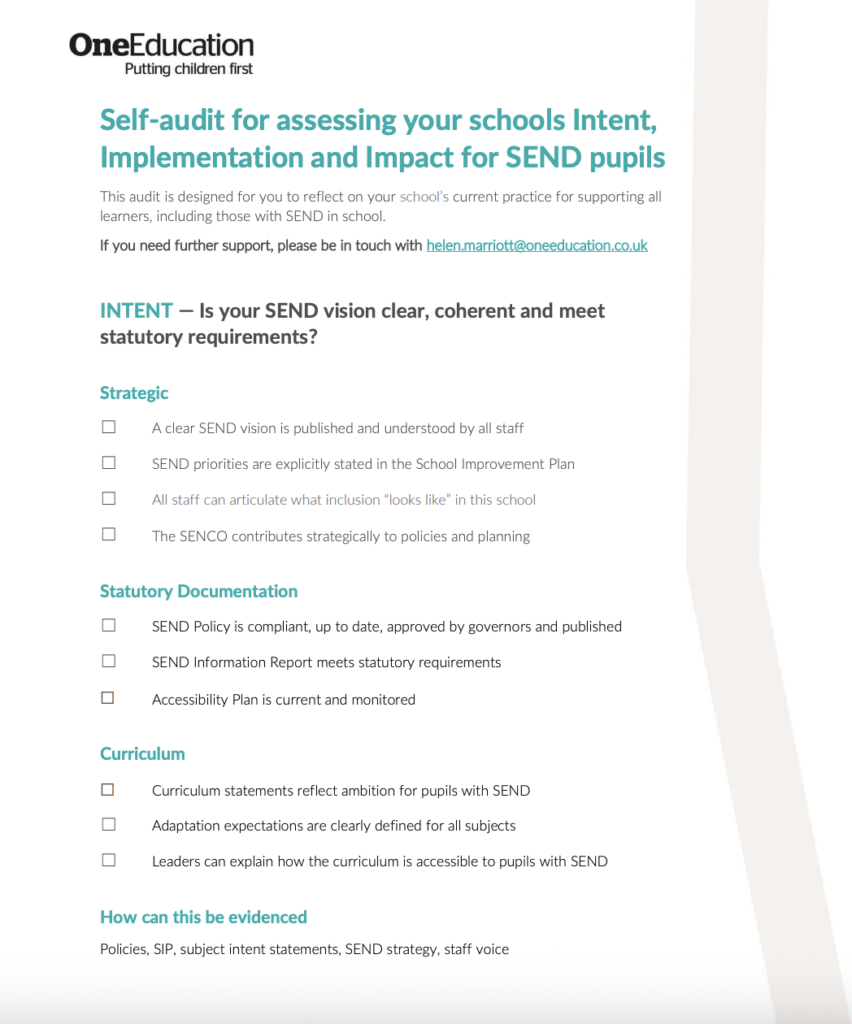
Download the SEND self-audit tool here.
The audit is based around the 3 I’s – Intent, Implementation, and Impact. These are used by Ofsted to help understand a school’s ‘quality of education’.
- Intent – this considers the planning of a purposeful curriculum. It looks at what all pupils need to learn and understand at each stage of their education. There needs to be a clear focus for all vulnerable pupils including those with SEND.
- Implementation – this focuses on how the school’s intent is delivered. This will include how teaching and support is adapted for individual pupils to allow all children to learn, remember and use what they have learnt.
- Impact – this thinks about how outcomes are measured and acted upon. It looks at their progress both academic and non-academic
Through this process, schools can identify strengths within their existing practice, as well as highlight gaps or areas for development that may otherwise go unnoticed. Crucially, this helps to build staff understanding and confidence around inclusive practice, promoting consistency across the whole school.
Ultimately, undertaking a SEND self-audit demonstrates a clear commitment to inclusion and continuous improvement, providing reassurance to parents, governors and wider stakeholders that vulnerable pupils are being supported effectively.
Please visit our SEND page to learn more about our support for schools and trusts.